 Canada
 United States
How-to
Barley Straw, Pond Vacuums, and Muck Rakes: What Actually Works for a Mucky Bottom
An honest look at raking, vacuuming and barley straw for a soft, black pond bottom, and why the lasting fix pairs light cleanup with bacteria and oxygen.
Last updated August 31, 2026
To clean muck from the bottom of a pond you can rake it from the edges, vacuum shallow reachable spots, or pull off floating debris, but manual methods only reach so far and leave the organic cause behind. Barley straw shows mixed, limited results in university trials. The most complete approach pairs light mechanical cleanup with a beneficial-bacteria conditioner and bottom-up aeration.
If your pond bottom has gone soft, black and a little smelly, your first instinct is usually to reach for a tool. Grab a rake, rent a vacuum, or toss in a bale of barley straw and drag the muck out yourself. It is a reasonable place to start, and some of it genuinely helps. But before you spend a weekend hauling wet sludge up the bank, it is worth knowing what each method can and cannot do, and where manual cleanup quietly runs out of road.
The short version: you can physically remove muck from the edges and shallows, and that is real progress. What no rake or vacuum can do is remove the cause of the muck, the steady rain of leaves, algae die-off, feed and runoff that settles, rots without oxygen, and rebuilds the layer you just cleared. That is why the honest, complete answer is mechanical cleanup plus biology and oxygen, not one instead of the others.
What pond muck actually is (and why it matters here)
Pond muck is mostly organic material: decomposed leaves, dead algae, uneaten fish food and other debris that has settled and broken down. When that layer sits at the bottom without oxygen, it turns black, releases a rotten-egg smell, and keeps feeding the next algae bloom with the nutrients it gives off. A thin organic layer is normal in any pond. The trouble starts when it deepens enough to steal usable depth, drive odour, or pull oxygen out of the water.
The distinction that decides your whole strategy is organic versus inorganic. Beneficial bacteria digest organic muck. They do nothing to silt, sand or clay, which are inorganic and can only be removed mechanically. So the real question is not "rake or bacteria," it is "how much of my bottom layer is soft rotting organics that biology can handle, and how much is heavy sediment that has to be lifted out." If you have not measured yet, start with how to measure pond muck depth so you know what you are actually dealing with before you buy a single tool.
Manual methods remove muck from where you can reach. They do not remove the reason the muck keeps coming back.
Manual and natural methods, honestly rated
Muck rakes and lake rakes
A long-handled muck or lake rake is the most useful hand tool for a mucky bottom, and it is genuinely effective at the edges and in shallow water. You can pull soft muck, matted string algae, leaves and rooted weeds up the bank and remove them from the system entirely. For a small pond or the swim area of a larger one, an afternoon of raking makes a visible difference. If this is your route, a proper long-reach tool matters, and you can see the options in our lake and muck rakes collection.
The limits are physical. A rake reaches as far as your arms and the handle allow, which on most ponds is the first several feet from shore. It cannot touch a deep whole-pond muck layer, and dragging through the deep black centre can do more harm than good, which we cover below.
Pond vacuums
Pond vacuums pull muck and water up through a hose so solids can be captured or discharged. In small ornamental ponds and accessible shallow zones they are useful for spot cleanup, and they remove material rather than stirring it back into the water. As a targeted tool they earn their place.
On a farm pond, acreage pond or lake, vacuuming is slow, incomplete and often impractical. You are cleaning a small footprint at a time, hauling a lot of water with the solids, and you still cannot reach the deep centre where the worst muck sits. Vacuums shine as spot cleanup alongside a broader program, not as a whole-pond solution.
Barley straw (what the trials actually show)
Barley straw is the classic "natural" pond remedy, and it is where expectations most often outrun the evidence. University extension research, including work summarised by Rutgers NJAES, reports mixed and limited results, and what effect shows up is generally related to slowing algae growth, not to removing an existing muck layer. Some ponds respond, others do not, and the mechanism depends on the straw decomposing under the right conditions.
The honest takeaway: barley straw is not a reliable stand-alone muck remover. It does not dredge, digest a black bottom, or address the nutrients and low oxygen underneath. Treat it, at most, as a minor supporting player, and do not count on it to clear a mucky bottom on its own.
A quick comparison of the methods
| Method | Reaches deep muck | Removes the organic cause | Effort | Best use |
|---|---|---|---|---|
| Muck / lake rake | No (edges and shallows only) | No | High, physical | Clearing edges, swim areas and weed mats |
| Pond vacuum | No (shallow, reachable spots) | No | High, slow | Spot cleanup in small or accessible ponds |
| Barley straw | No | No | Low | Minor, inconsistent algae support only |
| Bacteria + bottom-up aeration | Yes, the organic layer | Yes, digests it in place | Low, ongoing | Reducing whole-pond organic muck and preventing return |
Why manual methods alone rarely finish the job
Every manual method shares the same two blind spots. First, reach: rakes and vacuums work the edges and shallows, but the thickest, blackest muck usually sits in the deep centre where you cannot get to it. Second, and more important, cause: even a perfect cleanup does nothing about the nutrients and low oxygen that created the muck. Leaves keep falling, algae keeps blooming and dying, and the layer rebuilds. You end up on a treadmill, cleaning the same pond every season.
This is the honest limit of DIY, and it is not an argument against manual work. It is an argument for pairing it with something that removes the cause. Beneficial bacteria digest the organic layer where it sits, including the deep water a rake never touches, and oxygen is what lets them do it. For the evidence on that, see our honest look at whether beneficial bacteria really remove pond muck.
The safe way to combine mechanical and biological cleanup
The complete approach is not complicated, and it is the backbone of the 3-step Pond Care Program: Renew, Revive, Remove. Manual tools are the Remove leg. Bacteria and oxygen are what make Remove stick instead of resetting every summer.
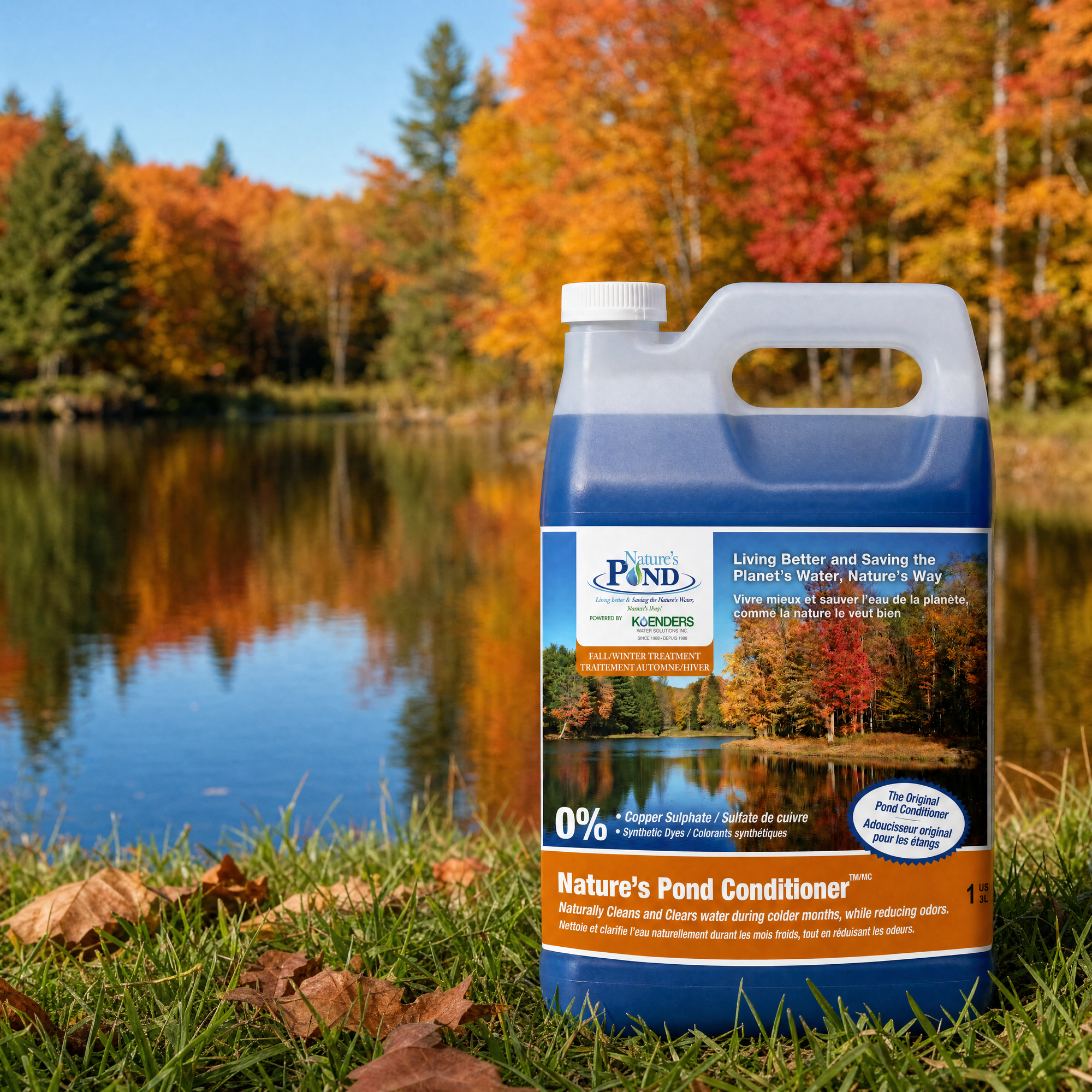
- Renew: condition the water with Nature's Pond Conditioner, an all-natural blend of aerobic and anaerobic beneficial bacteria, enzymes and plant extracts that digests organic muck into carbon dioxide and water. It is non-pathogenic and safe for fish, pets, livestock and wildlife when used as directed.
- Revive: add oxygen to the bottom with bottom-up aeration. Aerobic bacteria need dissolved oxygen at the sediment to work, and bottom-diffused aeration outperforms surface aeration for reaching the muck layer and mixing the water column.
- Remove: rake the edges, vacuum the reachable shallows, and skim floating debris to physically pull out what you can and take load off the biology.
Done together, the mechanical work handles what your hands can reach and the biology handles the deep organic layer, while aeration keeps the whole process running. That is the difference between a pond you clean every year and a pond that stays clean.
How to rake muck safely
If raking is part of your plan, do it in a way that removes material without stirring up trouble. Work the edges, keep your footing, and stay off the deep black layer.
What NOT to do: never stir up the black layer
The single biggest mistake in DIY muck removal is disturbing the deep black anaerobic sediment. That layer is oxygen-starved and holds hydrogen sulphide, the source of the rotten-egg smell. Churning it up, whether with an aggressive rake pass, a boat prop or a poorly placed vacuum, can suddenly release that oxygen debt into the water and crash dissolved oxygen across the pond. In warm weather that can stress or kill fish within hours.
This is also why aeration should be started slowly on an untreated pond rather than run full-blast on day one: you want to bring oxygen to the bottom gradually, not force a mixing event. Work the edges you can reach, remove material rather than churning it back in, and leave the deep centre to bacteria and oxygen. If you are unsure how deep your muck runs or where to begin, our in-house pond experts can give you a free recommendation sized to your pond.
Rake the edges. Oxygenate the bottom. Let biology finish the middle. Never blow up the black layer.
The bottom line
Rakes, vacuums and barley straw all have a role, but none of them is a complete answer on their own. Rakes and vacuums clean what you can reach and leave the cause behind. Barley straw shows mixed, limited results and does not remove muck. The lasting fix is to keep the light mechanical cleanup, add a beneficial-bacteria conditioner to digest the organic layer, and run bottom-up aeration so the bacteria can actually work. If you want the full picture on doing this without dredging, start with our pond muck guide, then start the program.
Related
- Does beneficial bacteria really remove pond muck? The honest, evidence-based answer
- How to measure pond muck depth Measure before you treat or buy
- How to get rid of pond muck The complete natural muck guide
- Lake and muck rakes Long-reach tools for edges and shallows
- The 3-step Pond Care Program Renew, Revive, Remove
- Talk to our pond experts Free recommendation sized to your pond
FAQ