 Canada
 United States
Aeration guide
Why Beneficial Bacteria Needs Oxygen: The Aeration Pairing Nobody Tells You About
The bacteria that digest pond muck fastest are aerobic, so they need dissolved oxygen. Here is why bottom-up aeration is the biggest lever on your results.
Last updated August 31, 2026
Yes. The bacteria that digest pond muck fastest are aerobic, meaning they need dissolved oxygen to work. In a low-oxygen pond they slow down or die back, and the bottom turns anaerobic, producing rotten-egg gas instead of clean digestion. Bottom-up aeration raises oxygen at the sediment interface, where the muck is, so bacteria work much faster.
Does beneficial bacteria need oxygen?
Short answer: the bacteria that do the heavy lifting in your pond, the ones that digest muck, fish waste, and dead plants, are aerobic. They need dissolved oxygen to work. Add them to a stagnant, low-oxygen pond and they either slow to a crawl or die back, and the bottom stays anaerobic. That is the piece most product labels quietly skip: bacteria is only as good as the oxygen in your water.
If you have already read how beneficial bacteria actually works, this is the companion truth. Bacteria and enzymes convert organics to carbon dioxide and water, but that clean, fast conversion is an oxygen-hungry process. This guide explains the aerobic-versus-anaerobic difference, what happens to bacteria in a starved pond, and why bottom-up aeration is the single biggest lever you can pull on your results.
Bacteria is not the variable that decides your result. Oxygen at the bottom is.
Aerobic vs anaerobic bacteria, and why the difference matters
Every pond runs two competing metabolisms at once. Which one wins is decided almost entirely by how much oxygen reaches the sediment, where most of the organic load sits.
Aerobic digestion: fast, clean, converts organics to CO2 and water
Aerobic bacteria breathe dissolved oxygen. Given enough of it, they digest organic matter quickly and completely, breaking muck and waste down into carbon dioxide and water with almost no leftover odour. This is the process you are paying for when you add a beneficial-bacteria conditioner: it is fast, it is clean, and it steadily lowers the nutrient load that feeds algae.
Anaerobic bottom sediment: slow, produces rotten-egg gas
When oxygen cannot reach the bottom, a different crew takes over. Anaerobic bacteria work without oxygen, but slowly and messily. Instead of clean digestion they release hydrogen sulphide, the rotten-egg smell, along with methane and other gases. This is exactly what is happening when a pond starts to stink in late summer. If your water has that odour, the root cause is an oxygen problem: see why your pond smells like rotten eggs for the full diagnosis.
| Aerobic (oxygen present) | Anaerobic (oxygen absent) | |
|---|---|---|
| Speed of digestion | Fast | Slow |
| Main products | Carbon dioxide and water | Hydrogen sulphide, methane |
| Odour | Little to none | Rotten-egg, swampy |
| Effect on muck layer | Steadily reduced | Accumulates, turns black |
| What favours it | Bottom aeration, circulation | Stagnation, stratification |
What happens to bacteria in a low-oxygen pond
Picture a pond you have never aerated. On a hot, calm day the surface water is warm and holds far less oxygen than cool water can, and the bottom is cut off from the surface by a temperature layer called the thermocline. Oxygen at the sediment can be near zero. Now you dose a warm-water bacteria product and wait.
- The aerobic strains you added have little oxygen to breathe, so their digestion stalls almost immediately.
- The organic load they were supposed to eat keeps rotting anaerobically, feeding the rotten-egg gas instead.
- Nutrients released by that decay, the phosphorus and nitrogen, stay in the water and feed the next algae bloom.
- You conclude the bacteria did not work, when in reality the pond never gave it the oxygen it needed.
This is the most common reason people say pond bacteria is a waste of money. It is not usually the bacteria. It is the missing oxygen. Fix the oxygen and the same product often performs completely differently.
How bottom-up aeration multiplies bacterial digestion
Muck does not float. It settles on the bottom, so that is exactly where the oxygen has to go. Bottom-up diffused aeration works by releasing a column of fine bubbles from a diffuser on the pond floor. As those bubbles rise they drag bottom water up with them, breaking the thermocline, circulating the whole pond, and carrying oxygen straight to the sediment interface where the bacteria and the muck actually meet.
We will not put a made-up multiplier on this, because the honest answer is that it depends on your pond. But the direction is not in doubt: oxygen at the sediment is the limiting factor for muck digestion, so raising it is the biggest single lever on how fast your bacteria works. For a full walk-through of aeration types and how to choose one, read how to choose and size aeration.
Bottom diffused vs surface aeration for muck
Not all aeration is equal for this job. A fountain or surface paddle looks nice and adds oxygen to the top layer, but it does little for the bottom, which is precisely where the muck and the anaerobic zone live. For destratification and muck digestion, bottom-diffused aeration outperforms surface aeration because it delivers oxygen from the bottom up.
| Type | Where it adds oxygen | Effect on bottom muck | Best for |
|---|---|---|---|
| Bottom-diffused | At the sediment, bottom-up | Directly oxygenates the muck layer | Deeper ponds, destratification, muck |
| Surface (fountain / paddle) | Top layer only | Limited effect at the bottom | Shallow ponds, aesthetics, aeration accents |
Can you run bacteria without aeration? The honest answer
You can, and in the right pond it still helps. A shallow, wind-swept pond that naturally mixes and holds decent oxygen can get real value from bacteria alone, especially for water clarity. But results are slower and less reliable, and for muck reduction specifically, bacteria without oxygen at the bottom is fighting with one hand tied behind its back.
So the honest framing is not "bacteria does nothing without aeration." It is: bacteria plus bottom aeration reduces muck faster and more dependably than either one alone, and the deeper or muckier your pond, the more the aeration matters. If you are weighing the two, our companion guide on why aeration is the missing half of muck removal goes deeper on the pairing.
How to pair them: the Revive step
This pairing is built into the 3-step Pond Care Program on purpose. Renew conditions the water with the beneficial bacteria and enzyme blend. Revive supplies the oxygen that lets those aerobic strains actually work. Remove clears out what mechanical effort can reach. The order matters, and Revive is the step people skip and then wonder why Renew underdelivered.
- Renew: dose the beneficial bacteria and enzyme conditioner at the label rate for your pond size.
- Revive: run bottom-diffused aeration continuously through the warm season so the sediment stays aerobic.
- Remove: rake or pull the coarse debris and dead weeds that bacteria cannot digest.
- Repeat on a maintenance cadence as water stays warm; the biology compounds season over season.
Sizing your aeration
The right amount of aeration depends on your surface acres, average depth, and shape, plus whether you have grid power at the water. We used to point people at an online calculator, but the honest way to size a system is to have someone look at your actual pond. Our in-house pond experts will do that for free: tell us your dimensions and we will recommend a system and diffuser placement. Start with a free sizing estimate from our pond experts.
If your pond has no power line, you are not stuck. Off-grid ponds can run windmill aeration on wind alone or solar aeration on sunny, low-wind sites, both of which oxygenate from the bottom up just like a grid-powered system. The bacteria does not care how the oxygen arrives, only that it does.
The bottom line
Beneficial bacteria works, but oxygen decides how well. Aerobic strains digest muck cleanly and fast when dissolved oxygen reaches the sediment, and stall when it does not, leaving the bottom to go septic and refuel algae. If you only change one thing to make your bacteria perform, add bottom-up aeration. Pair the two, run them through the warm season, and give the biology a full season to compound.
Related
- How beneficial bacteria actually works The full mechanism-first bacteria guide
- Choosing and sizing pond aeration Types, benefits, and how to size it
- Why your pond smells like rotten eggs The anaerobic-bottom odour, diagnosed
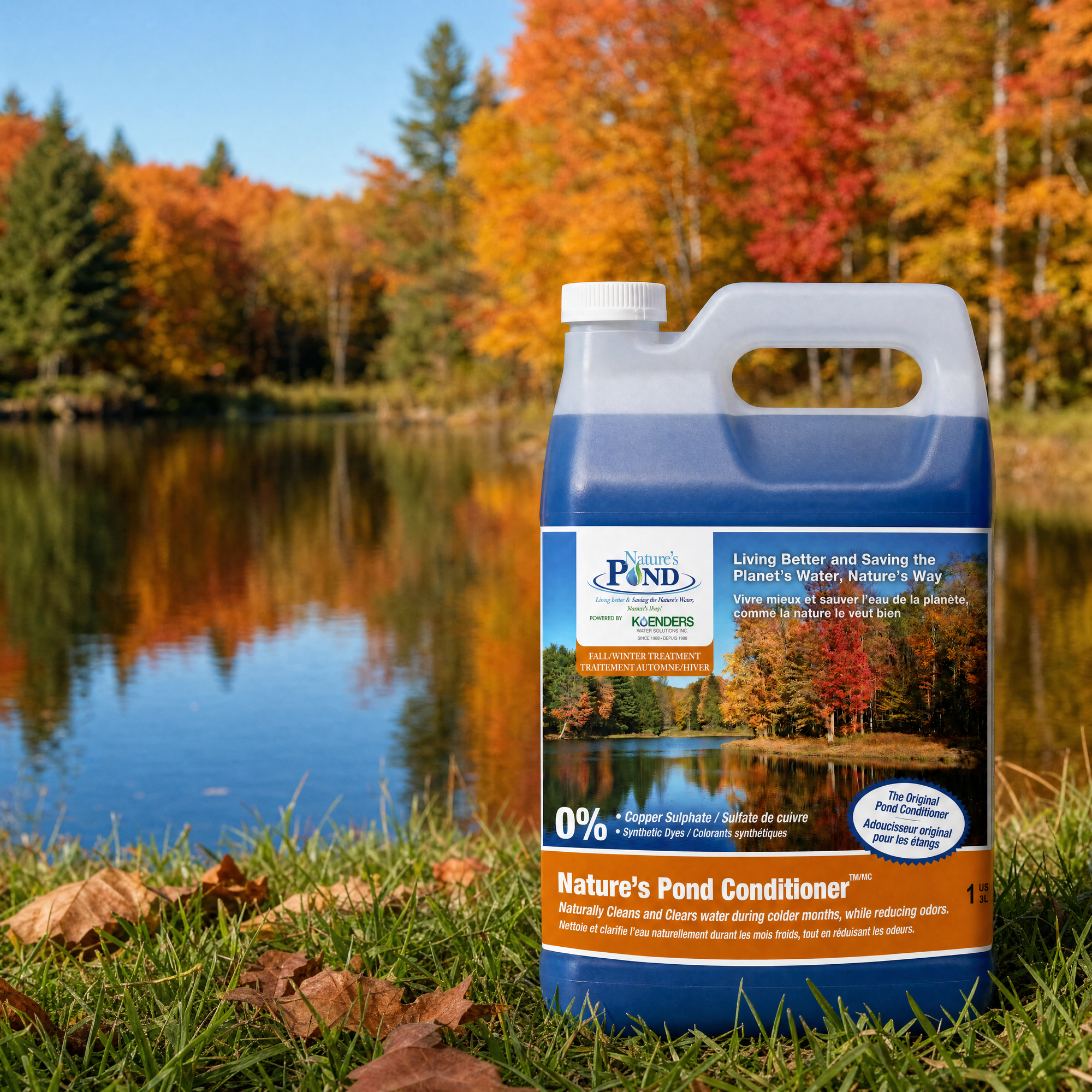
- Nature's Pond Conditioner The bacteria and enzyme blend
- The 3-step Pond Care Program Renew, Revive, Remove
- Get a free sizing estimate Our pond experts size your aeration
FAQ