 Canada
 United States
Comparison
Pond De-Icer vs Aeration in Winter: Which Keeps Fish Alive (and What It Costs to Run)
A de-icer keeps a hole open while aeration also adds oxygen from the bottom up. Here is which wins for fish survival, plus the supercooling caution nobody puts up front.
Last updated August 31, 2026
A de-icer keeps a small hole open in the ice, while aeration also adds oxygen from the bottom up. For keeping fish alive, oxygen matters most, so aeration usually wins. In northern climates, run it at reduced airflow with a shallow diffuser, because full summer settings can supercool the whole pond and stress fish.
When the ice comes in, most pond owners reach for one of two devices: a de-icer or an aerator. They look similar from the shore, since both leave a patch of open water. Underneath, they do very different jobs, and the difference decides whether your fish make it to spring.
This guide compares the two honestly, including the one caution most product pages leave out: in a cold climate, running an aerator on summer settings can supercool your pond and do more harm than good. If you would rather skip the reading and get a straight recommendation for your pond, our in-house pond experts will give you a free winter setup and sizing estimate.
De-icer vs aeration: what each device actually does
The two tools solve two different problems. One fights ice. The other fights suffocation. Knowing which problem you actually have is the whole decision.
A de-icer keeps a hole open with heat or agitation
A de-icer (sometimes sold as a pond heater or ice preventer) floats at the surface and keeps a small area from freezing over. Some models use a heating element, others use a small propeller that keeps water moving so it cannot lock up. Its single job is to hold an open hole so trapped gases can vent and a little air can exchange at the surface. It does very little for the oxygen sitting deeper in the water column, where your fish are actually holding through the winter.
Aeration exchanges oxygen from the bottom up
A winter aeration system runs a compressor on shore that pushes air down to a diffuser near the pond bottom. The rising column of bubbles circulates water and carries oxygen into the pond while venting off gases like carbon dioxide and hydrogen sulphide. That gentle circulation also keeps a hole open in the ice, so a properly run aerator does the de-icer's job and the oxygen job at the same time. Bottom-up diffused aeration outperforms surface methods because it moves oxygen through the whole water column instead of just the top few centimetres.
A de-icer fights ice. Aeration fights suffocation. Winter fish kills are a suffocation problem, not a temperature problem.
Which keeps fish alive (oxygen is the real goal)
Here is the fact that reframes the whole comparison: winter fish kill is almost never caused by cold. Fish are built to slow down and ride out freezing water. They die when dissolved oxygen runs out under the ice. Snow-covered ice blocks the sunlight that submerged plants need to make oxygen, while the muck and decaying organics on the bottom keep consuming what oxygen is left. Over a long, snowy winter the pond can quietly run down to nothing.
A de-icer holds a vent hole, which helps toxic gases escape, but it does not actively replenish the oxygen your fish are burning through down deep. Aeration does. That is why, for fish survival, aeration usually wins. If your only goal is keeping a small opening near a dock or an intake line, a de-icer may be enough. If your goal is keeping fish alive through a hard winter, you want oxygen in the water, not just a hole in the ice.
If you want the deeper mechanism behind winter kill, our seasonal pond care calendar walks through what happens under the ice as the season turns.
The supercooling caution nobody puts up front
Now the honest part. Aeration is the better tool for fish, but only if you run it correctly in winter. Run it wrong and you can chill your pond into a worse position than doing nothing.
Why summer aeration settings are wrong for winter
In summer, the goal of aeration is aggressive destratification: you want to churn the whole pond, break up the warm-top, cold-bottom layering, and push oxygen everywhere. In winter, that same aggressive mixing becomes a liability. Fish survive the cold by holding in the deepest, slightly warmer water near the bottom, where water is densest around 4 degrees Celsius. If you pull that near-freezing surface water down and mix the entire pond, you can supercool the refuge zone the fish depend on and chill them beyond what they can tolerate. This is the mistake behind many well-intentioned winter aeration losses.
Relocate the diffuser shallow, reduce the airflow
The fix is simple and it is the opposite of summer operation:
- Reduce the airflow. You want gentle circulation that holds a small open hole, not a rolling boil that mixes the whole pond.
- Move the diffuser shallower. Instead of sitting on the deepest bottom, the diffuser is set higher up, or off to one side, so it oxygenates the upper water and vents gas without dragging the cold surface layer down into the fishes' deep refuge.
- Keep the open hole modest. A small vent hole is the target, not an ice-free pond. A large churned opening loses heat and increases supercooling risk.
Getting the diffuser depth and airflow right for your pond depth and climate is exactly the kind of thing worth a two-minute conversation. Tell us your pond size, depth, and region and we will recommend a winter setup at no charge.
De-icer vs winter aeration, side by side
| Feature | De-icer | Winter aeration |
|---|---|---|
| Primary function | Keeps a small surface hole open | Adds oxygen and circulates, and keeps a hole open |
| Adds dissolved oxygen deep in the pond? | No, mainly surface exchange | Yes, from the bottom up |
| Keeps a hole open in the ice? | Yes | Yes |
| Cold-climate supercooling risk | Low | Real if run on summer settings, low on reduced winter settings |
| Off-grid option available? | Rarely, usually needs power | Yes, via windmill or solar aeration |
| Best for | A small vent near a dock or pipe | Keeping fish alive through winter |
Running cost: watts and climate suitability
Cost is a fair question, and the honest answer is that it depends on the specific model and how cold your winters run. Heating-element de-icers can draw meaningful power because they are literally warming water against the freeze, so wattage varies widely and can be higher than a small aeration compressor. Before you compare running costs, check the exact wattage on the specific product you are considering, since a small floating aerator-style unit and a heated de-icer are not in the same range.
The bigger cost lever is whether you have power at the pond at all. On an acreage or a remote dugout, running a line out to the water can dwarf the price of any device. That is where off-grid aeration changes the math entirely: a windmill aeration system runs on wind with no power line and no ongoing energy bill, and solar aeration suits sunny, lower-wind sites. Neither adds a monthly meter reading. If you are weighing options for a far pond, off-grid and homesteader pond owners will find those two collections the most relevant.
Do you need both?
Usually, no. A winter aeration system run correctly already keeps a hole open and oxygenates, so it covers the de-icer's job. The main case for adding a de-icer is a specific spot you must keep ice-free for a reason unrelated to fish, for example an open patch near a dock, a livestock watering access, or an intake or overflow pipe in extreme cold. For general fish health across the whole pond, spend your budget on getting the aeration right rather than buying two devices that partly overlap.
How to choose by climate and pond depth
Match the tool to your conditions rather than to a generic recommendation:
- Mild winters, thin or intermittent ice: a de-icer or a lightly run aerator may be all you need to keep gases venting.
- Cold winters with sustained snow-covered ice: prioritise aeration for oxygen, run it on reduced winter settings with a shallow diffuser, and clear snow off part of the ice so light can still reach submerged plants.
- Deep ponds: be extra careful with airflow, because there is more cold water to accidentally mix down. Keep the diffuser shallow and the flow gentle.
- Shallow ponds: these are the highest winter-kill risk because they hold less oxygen and freeze deeper, so steady gentle aeration matters most here.
- No power at the pond: go off-grid with windmill or solar aeration rather than trenching a power line to a de-icer.
Whatever you choose, the goal is the same: enough oxygen to carry your fish to ice-out without chilling their deep refuge. When you are ready to translate that into a specific system, our guide to sizing an aerator for your pond covers the acres-and-depth math, and if you run off-grid, our guide to running a windmill aerator through winter covers the airline-icing details.
The bigger picture: a healthier pond needs less winter drama
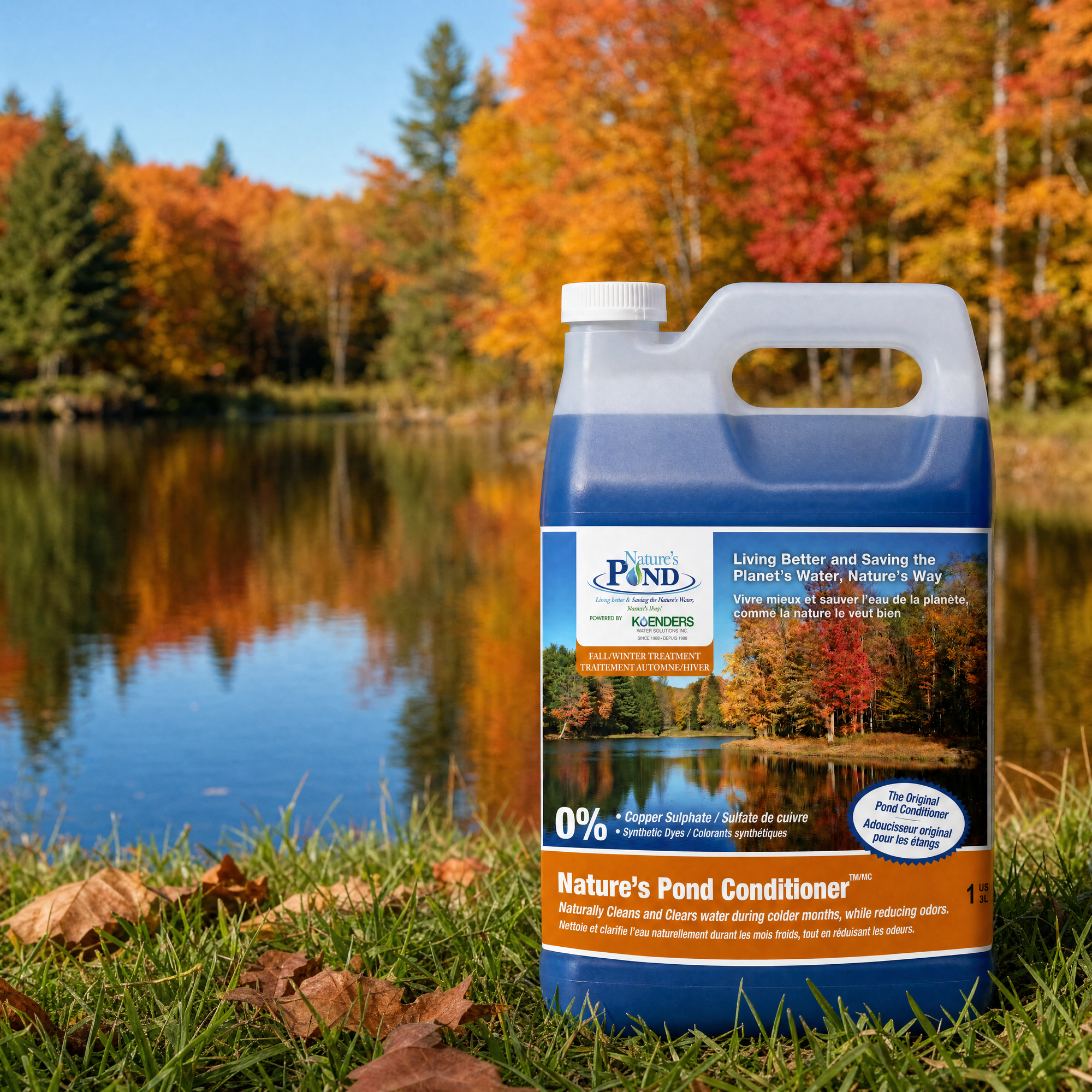
The reason a pond gets dangerous under the ice is the same reason it turns green in summer: too many nutrients and too much organic muck on the bottom, feeding decay that eats oxygen. Aeration is one lever. Digesting that muck with beneficial bacteria is the other. Nature's Pond Care builds both into the 3-step Pond Care Program, an all-natural approach that reduces the organic load year-round so your pond enters winter with less oxygen demand and far less risk. It is the durable, chemical-free alternative to fighting the same fire every season.
Ready to buy? You can find a local retailer or talk to our pond experts for a free winter recommendation sized to your pond.
Related
- Seasonal pond care calendar What happens under the ice as the season turns
- What size aerator does your pond need? Sizing by acres, depth and season
- Windmill aeration through winter Off-grid winter aeration and airline ice
- Windmill aeration systems Off-grid, no power line required
- Solar aeration For sunny, lower-wind sites
- Get a free winter setup estimate Our pond experts size it for you
FAQ