 Canada
 United States
Natural care
Why Is My Pond Water Cloudy? A Diagnostic Guide
Cloudy pond water has several very different causes, from suspended clay to a short-lived bacterial bloom, tannins or organic matter. Diagnose it first, then match the fix.
Last updated August 3, 2026
Cloudy pond water is a symptom, not a single problem, so the first job is to identify the cause. The four most common are suspended clay or silt (muddy, tan or brown, often worse after rain), a short-lived, usually harmless bacterial bloom (a milky or grey-white haze for a few days), brown tannin staining from leaves and debris, and general organic-matter cloudiness. Each looks different and each responds to a different fix, so match the treatment to the cause rather than reaching for one product for everything.
The short answer: cloudy water has several very different causes
Cloudy is a color-and-clarity description, not a diagnosis. Before you treat anything, look closely at the color, the timing and how long it has lasted, because those three clues usually point straight at the cause.
Use this quick read. Tan, brown or muddy water that worsened after rain or wind is almost always suspended clay and silt. A milky, grey or greenish-white haze that appeared over a day or two and looks like the water is faintly clouded throughout is typically a transient bacterial bloom. Tea, amber or dark-brown but still translucent water is usually tannin staining from leaves and organic debris. A dull, hazy, greyish look that lingers alongside accumulating bottom sludge points to organic-matter cloudiness. Green cloudiness is a separate issue caused by suspended algae, which we cover in the algae guide.
Suspended clay and silt (muddy or brown, often after rain)
If your water turned tan or chocolate-brown after a heavy rain, snowmelt, high wind or livestock and equipment working the banks, you are almost certainly looking at suspended clay and silt. Fine clay particles carry a slight electrical charge that keeps them from settling, so they can hang in the water column for a long time in a still pond.
This is a physical, mineral cloudiness, not a biological one. That distinction matters for the fix: because there is no organic food source involved, adding a beneficial-bacteria conditioner will not clear clay turbidity. Clay usually needs the particles to be encouraged to clump and settle, and the inflow of new sediment to be reduced (stabilizing bare banks, fencing livestock away from the shoreline, slowing runoff). Aeration and circulation help keep a pond healthy overall but will not, on their own, drop out heavy clay.
The specific coagulant or flocculant products and dose rates used to settle clay depend on your water chemistry and are outside what we cover here.
A short-lived bacterial bloom (and why it is not the same as adding conditioner)
Sometimes a pond turns milky, grey or faintly white for a few days, then clears on its own. This is often a transient bacterial or plankton bloom: a natural, temporary spike in microscopic life responding to a change in temperature, nutrients or oxygen. It is usually benign and self-limiting, and it commonly resolves as conditions rebalance.
Here is the key point that trips people up. A bloom that made your water cloudy is not the same thing as adding a beneficial-bacteria conditioner. A bloom is an uncontrolled, temporary population surge you did not cause and cannot dose. A conditioner is a formulated blend of beneficial bacteria and enzymes you add on purpose to digest organic muck and consume the excess nutrients that feed problems over time. So there is no contradiction in saying a bloom clouded your water while also using beneficial bacteria as part of ongoing care: they are different events with different roles.
Because a transient bloom usually clears itself, the best response is patience plus supporting stable conditions. Steady aeration helps keep oxygen and circulation consistent so the pond rebalances rather than swinging.
Brown tannin-stained water from leaves and debris
Water that looks like weak tea, amber or dark brown but is still see-through, rather than muddy and opaque, is usually stained by tannins. Tannins are natural plant compounds that leach from fallen leaves, needles, wood and other decaying organic matter, especially in ponds ringed by trees or fed by wetland runoff.
Tannin staining is a color issue more than a clarity issue, and it is usually harmless to the pond. Reducing the source helps most over time: removing leaf litter and coarse debris before it breaks down, and skimming or raking accumulated material out of the water. A mechanical tool such as a weed cutter and rake makes it easier to pull out the leaves and organic mats that keep releasing tannins.
For the tinted look itself, a natural pond dye deepens the water's color and shades it, which many owners prefer aesthetically. Dye limits sunlight penetration; it is a shade product, not a treatment that removes tannins or clears sediment.
Organic-matter cloudiness and how bacteria help over time
A persistent dull, hazy look, often paired with a soft sludge layer building on the bottom and sometimes an earthy or rotten-egg smell, points to organic-matter cloudiness. Fine suspended organic particles and the byproducts of decaying leaves, dead algae, fish waste and uneaten feed keep the water from clearing.
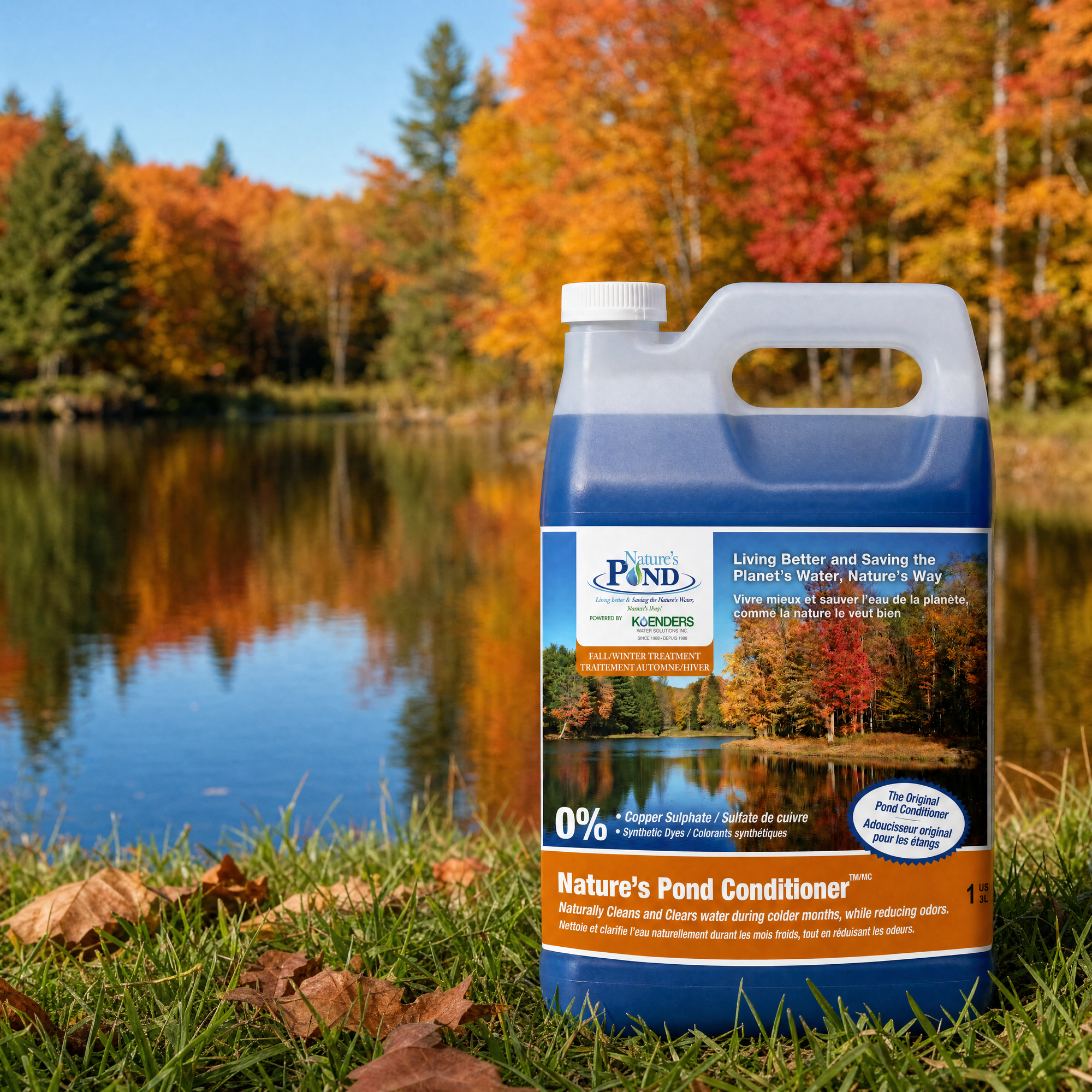
This is the one cloudiness cause where beneficial bacteria genuinely fit. Beneficial-bacteria and enzyme conditioners digest that organic muck and consume the excess nutrients it releases, so the buildup that clouds the water and feeds algae has less to work with over time. The mechanism is digestion of organics and nutrient reduction, not a chemical that clears water instantly, so expect gradual improvement through the season rather than overnight.
This is the same nutrient-loop logic covered in depth in our natural pond care approach: reduce the organic load and the excess nutrients, and you treat the cause instead of chasing the symptom.
When bacteria will help and when they will not
Being honest about limits is the whole point of a diagnostic guide. Beneficial bacteria help with organic-matter cloudiness and the muck and nutrients behind it, because there is organic material for them to digest.
Beneficial bacteria will not clear clay or silt turbidity. Suspended clay is a mineral, physical problem with no organic food source, so a conditioner has nothing to act on there. If your water is muddy-brown after rain, treat it as a sediment and runoff problem, not a bacteria problem. Reaching for the wrong tool wastes money and time, which is exactly why identifying the cause first matters.
How aeration and dye fit the fix for each cause
Aeration is the most broadly useful tool across these causes. Adding oxygen and circulation supports the beneficial bacteria that digest organic matter, helps a transient bloom rebalance, and keeps the pond stable so problems are less likely to swing. Windmill, solar and electric aerators and decorative fountains all move and oxygenate water; a fountain adds surface aeration and visual appeal, while bottom-based aeration circulates the whole water column. Aeration does not, however, settle heavy clay on its own.
Natural pond dye plays a narrower role. It shades the water and limits sunlight, which is useful for the tinted-water look and for reducing the light that fuels growth over the season. It is not an algaecide and it does not remove sediment, tannins or organic haze; treat it as a shade and aesthetic layer alongside the real fix.
Not sure which cause you are looking at, or want help sizing an aerator to your pond? Reach out and describe the color and timing, or start with the dosing calculator to plan a conditioning program for organic-matter cloudiness.
Related
FAQ