 Canada
 United States
Comparison
Copper Sulphate in Livestock Water Tanks: Dosage, the Sheep Warning, and Safer Alternatives
How much copper sulphate to dose in a stock tank, why it corrodes metal and endangers sheep, and the fish-safe biological route that lasts.
Last updated August 31, 2026
Copper sulphate is sometimes dosed at about one teaspoon per 1,500 gallons of tank water to control algae, but confirm the rate with your local extension. It corrodes metal tanks and pipes, can be toxic to sheep, and only sinks dead algae that rots and re-blooms. Beneficial bacteria plus aeration is a safer, durable alternative.
If your stock tank keeps greening up, copper sulphate looks like the fast, cheap answer: a spoonful of blue crystals and the algae disappears in a day or two. It does work in the short term. But the questions ranch owners actually ask, how much do I use, and is it safe for my animals, have answers that most product labels skip over.
The honest picture is this. Copper sulphate has a real dose, a real corrosion problem, and a species-specific danger that can kill sheep at levels cattle shrug off. And because it only knocks down algae that then sinks and rots, you end up dosing again and again. This guide gives you the commonly cited dosage (attributed to extension sources, not invented here), the warnings that matter, and the fish-safe beneficial bacteria alternative that treats the cause instead of poisoning the symptom.
How copper sulphate controls algae (and why it comes back)
Copper sulphate is an algaecide. Dissolved in water it releases copper ions that are toxic to algae cells, so a bloom that is thick and green in the morning can be brown and collapsing by the next day. That speed is the whole appeal.
The catch is what happens to the dead algae. It does not vanish. It sinks to the bottom of the tank or trough, decomposes, and releases the same nutrients (phosphorus and nitrogen) that fed the bloom in the first place. Those nutrients fuel the next bloom, so you dose again, and the cycle repeats. Copper is a symptom killer, not a cause fixer. This is the same treadmill we describe for larger waterbodies in our guide on how to get rid of pond algae naturally.
There is a second catch that gets less attention. Copper does not break down. The copper you add settles into the sediment at the bottom of the tank or pond and stays there, and each new dose adds to the load already present. In a portable tank you flush that out when you scrub, but in an earthen dugout or pond the copper accumulates in the mud season after season. That long-term buildup is one more reason copper is best treated as an occasional intervention, never a routine you run all summer.
Copper sulphate kills algae that then sinks, rots, and refuels the next bloom. You are not solving the problem, you are subscribing to it.
Common copper sulphate dosage (confirm with your extension first)
Extension guidance commonly cites a rate of about one teaspoon of copper sulphate per 1,500 gallons of water, which works out to roughly one ounce per 8,000 gallons, for controlling algae in cattle water tanks. That is a very small amount of a concentrated product, which is exactly why precision matters.
Two cautions before you reach for the bag:
- Confirm the rate and its legality with your local extension or provincial ag office. Recommended rates, and whether copper sulphate is even permitted for your use, vary by region and by water hardness. Soft water needs less copper to reach toxic levels, hard water needs more.
- Never eyeball concentrated product. The gap between an effective dose and an overdose is small. Measure by volume of water in the tank, not by how green it looks.
To dose by volume you first need to know how much water the tank holds. For a round tank, multiply the surface area by the depth; for large earthen water you would calculate acre-feet (surface acres times average depth in feet, divided by four). The point is the same: dose the water, not the algae. Guessing by how green the surface looks is how tanks get overdosed, and with copper an overdose is the outcome you least want near livestock.
It is also worth knowing that copper sulphate works best in warm water and can lose effectiveness in hard, alkaline water where the copper binds up before it reaches the algae. Some owners respond by dosing more, which is exactly the wrong move: more copper means more corrosion, more sediment buildup, and a smaller safety margin for the animals. If the water chemistry is fighting you, that is a signal to treat the cause rather than push the chemical harder.
The sheep warning: why copper sulphate can be lethal to sheep
This is the single most important line in this article. Sheep are extremely sensitive to copper. They store it in the liver, and the amount that builds up before it becomes dangerous is far lower than for cattle. A copper level that cattle tolerate can accumulate in sheep and trigger fatal copper toxicity, often with no warning until the animal crashes.
The practical rule: do not use copper sulphate in any water source shared with sheep, and be cautious with mixed herds or pastures where sheep, goats, or other animals might reach the treated tank. If you run or ever plan to run sheep, copper sulphate is a chemical to keep off the property, not just off that one tank.
A copper dose that is routine for cattle can be a death sentence for sheep. If sheep can reach the water, do not use copper sulphate.
Corrosion: what copper sulphate does to metal tanks and pipes
Copper sulphate is corrosive to metal. In a galvanized steel or aluminum stock tank, and in the plumbing and float valves attached to it, repeated copper sulphate dosing eats at the metal, shortens the life of the tank, and can put dissolved metals into the very water your animals drink.
If you have a metal tank, copper sulphate is working against your equipment every time you use it. Owners often end up replacing corroded tanks and fittings sooner than expected, a cost that rarely gets counted when copper sulphate is called the cheap option. Plastic and poly tanks resist the corrosion, but they do nothing about the sheep risk or the re-bloom loop.
The feedback loop: kill, sink, rot, re-bloom
Step back and look at the pattern copper sulphate creates:
- You dose. The algae dies within a day or two.
- The dead algae sinks to the bottom and decomposes.
- Decomposition consumes oxygen and releases nutrients back into the water.
- Those nutrients feed a fresh bloom, often within a week or two in hot weather.
- You dose again, adding more copper to the sediment each time.
Every cycle leaves the underlying condition, nutrient-rich, low-oxygen, still water, exactly where it was, or worse. Frequent re-dosing is not a sign the product is failing; it is a sign the actual cause was never treated. The durable fix is to remove the nutrients algae feed on and keep the water oxygenated, which is the entire logic of the Renew, Revive, Remove program.
Safer alternatives: cleaning, beneficial bacteria, and aeration
The good news is that the safe route is also the low-drama route once it is set up. It comes down to three habits.
1. Clean and shade
Empty and scrub portable tanks on a regular cycle so slime never gets a foothold, and shade the tank from direct sun. Sun plus nutrients plus still water is the recipe for green; take away the sun and you slow the bloom before it starts. Our full walkthrough on how to get rid of algae in a stock tank ranks every method by safety.
2. Fish-safe beneficial bacteria
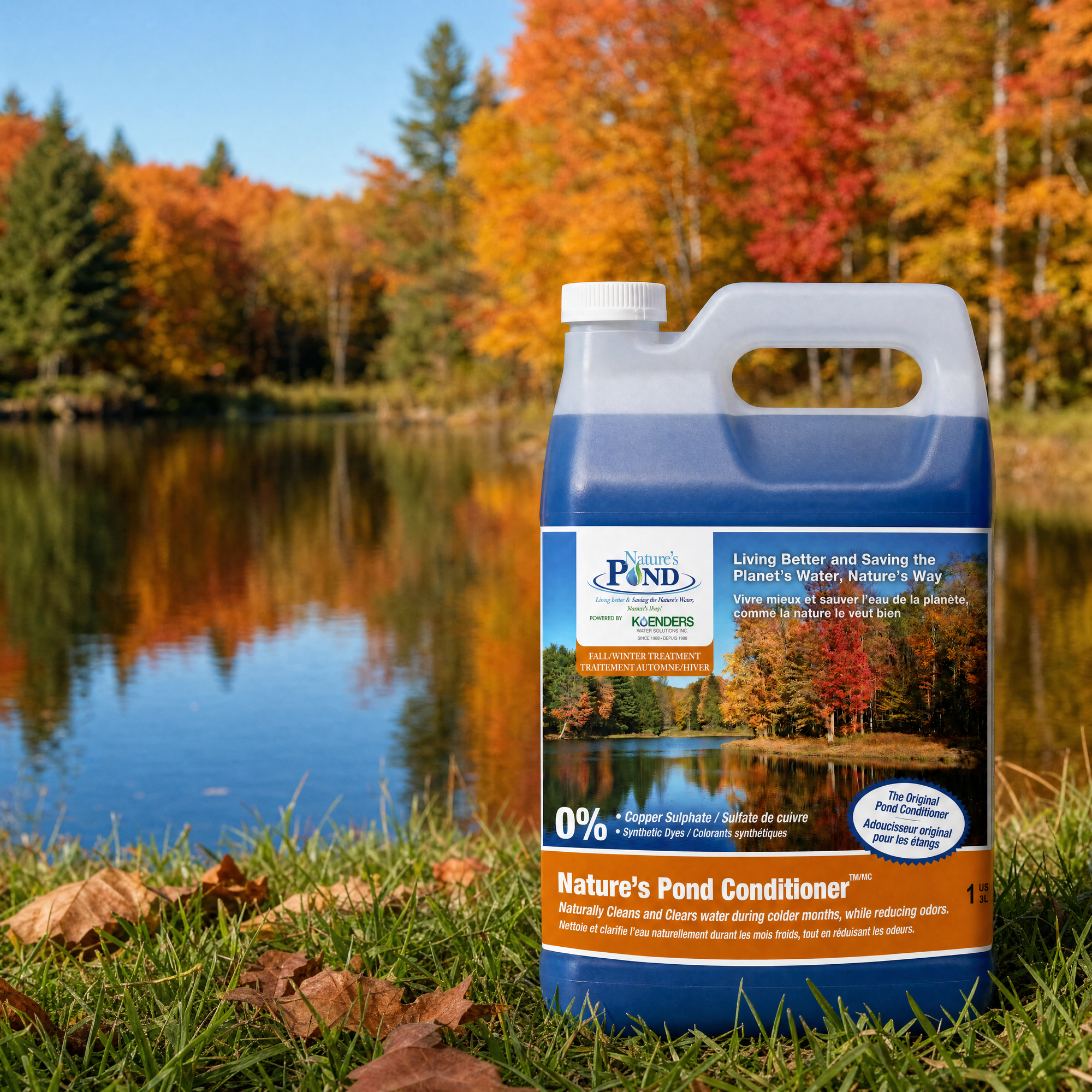
Instead of poisoning the algae, add beneficial bacteria that digest the organic waste algae feed on. Nature's Pond Conditioner is an all-natural blend of aerobic and anaerobic beneficial bacteria, enzymes, and plant extracts that converts organics to carbon dioxide and water. It is non-pathogenic and safe for fish, pets, livestock, and wildlife when used as directed, so there is no drinking-water withdrawal, no corrosion, and no species-specific toxicity to worry about. That is the core difference between beneficial bacteria and copper sulphate: one removes the fuel, the other just burns off the current crop.
3. Aeration on larger water
In dugouts and larger ponds, continuous bottom aeration keeps the water oxygenated so it stays aerobic and stops going black and stagnant, and it lets the beneficial bacteria work far faster. Aeration alone still leaves the nutrients, and bacteria alone works slowly in low-oxygen water, so the two belong together. If your issue is a big earthen dugout rather than a tank, start with our dugout water treatment for cattle guidance instead of any tank chemical.
For remote pasture water with no power line, aeration does not have to mean running electricity out to the dugout. Windmill aeration is off-grid and needs no power line, using wind to drive an air compressor that feeds a bottom diffuser. It is the answer copper sulphate can never be, because it changes the condition that grows algae in the first place rather than resetting the count every couple of weeks. Bottom-up diffused aeration also outperforms surface aeration for keeping the deeper water mixed and oxygenated.
Copper sulphate vs beneficial bacteria: side by side
| Factor | Copper sulphate | Beneficial bacteria + aeration |
|---|---|---|
| How it works | Copper ions poison and kill algae cells | Bacteria digest the nutrients algae feed on |
| Sheep safety | Can be toxic to sheep; keep off shared water | Safe for livestock when used as directed |
| Corrosion on metal tanks | Corrosive to galvanized and aluminum tanks and pipes | No corrosion |
| Nutrient outcome | Dead algae sinks, rots, and re-blooms | Nutrients digested so blooms are starved out |
| Recurring dosing | Re-dose every bloom, all season | Maintenance dosing plus routine cleaning |
| Drinking-water withdrawal | Dose precisely; margin for error is small | None when used as directed |
| Verdict | Fast but temporary and risky | Slower to start, durable and animal-safe |
Copper sulphate dosage figures above are cited from extension guidance, not stated as our recommendation. The takeaway is not a number, it is a direction: treat the cause and you stop paying for the symptom every two weeks.
When copper sulphate is the wrong tool for the job
Put simply, copper sulphate is the wrong choice if any of these apply to you:
- You keep sheep, or sheep can reach the water. The copper toxicity risk is not worth it.
- You use metal tanks or metal plumbing you would rather not replace early.
- You are tired of dosing the same tank over and over with no lasting change.
- You want water that stays palatable so animals keep drinking, since intake drives performance.
If none of those apply and you still choose to use it, confirm the rate with your extension, measure by water volume, and treat it as an occasional intervention rather than a routine. For everything else, the biological route is genuinely lower-effort over a season. Not sure which fits your setup? Our in-house pond experts will size a plan and give you a free recommendation for your tanks, troughs, or dugout.
The bottom line
Copper sulphate controls stock-tank algae fast, at a commonly cited rate of about a teaspoon per 1,500 gallons, but it corrodes metal, endangers sheep, and only sinks algae that rots and re-blooms. A clean-and-shade routine plus fish-safe beneficial bacteria, backed by aeration on larger water, treats the cause with no withdrawal, no corrosion, and no species toxicity. It is the safe, durable way to keep livestock water clear.
Related
- Bleach vs beneficial bacteria for stock tanks The other common tank chemical, compared
- Get rid of algae naturally Chemical-free algae control that lasts
- Clean livestock water guide Tanks, troughs, and dugouts in one place
- Nature's Pond Conditioner Fish- and livestock-safe beneficial bacteria
- Stock tank and trough care Safe algae control for livestock water
- Talk to a pond expert Free recommendation for your water setup
FAQ