 Canada
 United States
Seasonal guide
Cold Water vs Warm Water Pond Bacteria: Temperature, Timing, and Seasonal Dosing
Water temperature decides whether pond bacteria work. Here is when to start dosing in spring, what a cold-water blend is for, and how to time it in a short-season climate.
Last updated August 31, 2026
Most pond bacteria are warm-water strains that work best from roughly 75F to 90F and go dormant below about 50F. Cold-water strains are formulated to stay active in the roughly 32F to 50F range for early spring and fall. Start dosing once water rises above 50F, and lean on a cold-water blend at the shoulders of the season.
Cold water vs warm water pond bacteria: the short answer
If you have added beneficial bacteria to your pond and nothing seems to be happening, the first thing to check is not the product. It is your water temperature. Beneficial bacteria are living microbes, and like every living thing they have a temperature range where they thrive and a range where they simply shut down. Add them too early in a cold spring and they sit there, dormant, doing very little until the water warms up.
Most pond bacteria products are warm-water strains. They do their best digestion in genuinely warm water, roughly 75F to 90F, and they slow down sharply and go dormant once water drops below about 50F. Cold-water strains are a different set of microbes, selected to stay metabolically active down toward freezing, in the roughly 32F to 50F band, so they can keep working at the cold shoulders of the season when the warm-water strains have gone quiet.
Bacteria are not a chemical you pour in and forget. They are a living workforce, and water temperature decides whether they clock in or stay home.
This matters most for anyone with a short season: prairie, northern, and high-elevation ponds that spend months under ice and only see a brief warm window. Matching your dosing to water temperature is the difference between product that goes to work and product that waits. If you want the full picture of how this workforce operates, start with our guide to how beneficial bacteria and enzymes actually work.
The temperature threshold: why about 50F matters
There is no single magic number that flips bacteria on and off, but 50F is the practical line most warm-water blends are built around. Above it, the warm-water strains ramp up their metabolism and start digesting muck, fish waste, and dead plant matter in earnest. Below it, they throttle down and go dormant. That is why measuring water temperature, not air temperature, is the single most useful habit in seasonal dosing. A thermometer left a foot or two below the surface tells you far more than the forecast does.
Warm-water strains and their optimum range
Warm-water blends hit their stride in genuinely warm water, roughly 75F to 90F. This is peak season for muck and nutrient digestion, and it lines up with the same warm, sunny conditions that fuel algae blooms. In other words, the time your pond most needs the bacteria working hard is exactly when a warm-water blend is at its best. Consistent dosing through this window is where you get real muck reduction and clearer water, because the microbes are reproducing and digesting at full speed.
Cold-water strains for early spring and fall
Cold-water strains are formulated to stay active in the roughly 32F to 50F range. Their job is the shoulders: early spring right after ice-off, and late fall as the water cools. In these windows the warm-water strains are dormant, so a cold-water-rated blend keeps some digestion going through the transition. Progress is slower in cold water, because all biological activity slows when it is cold, but it keeps the pond from going completely idle at the exact moments organic load tends to spike.
| Formula | Active range | When to use | Main job |
|---|---|---|---|
| Cold-water strains | Roughly 32F to 50F | Early spring, late fall, cold climates | Keep digestion going at the shoulders of the season |
| Warm-water strains | Optimum roughly 75F to 90F, active above about 50F | Summer and the warm core of the season | Peak muck and nutrient digestion |
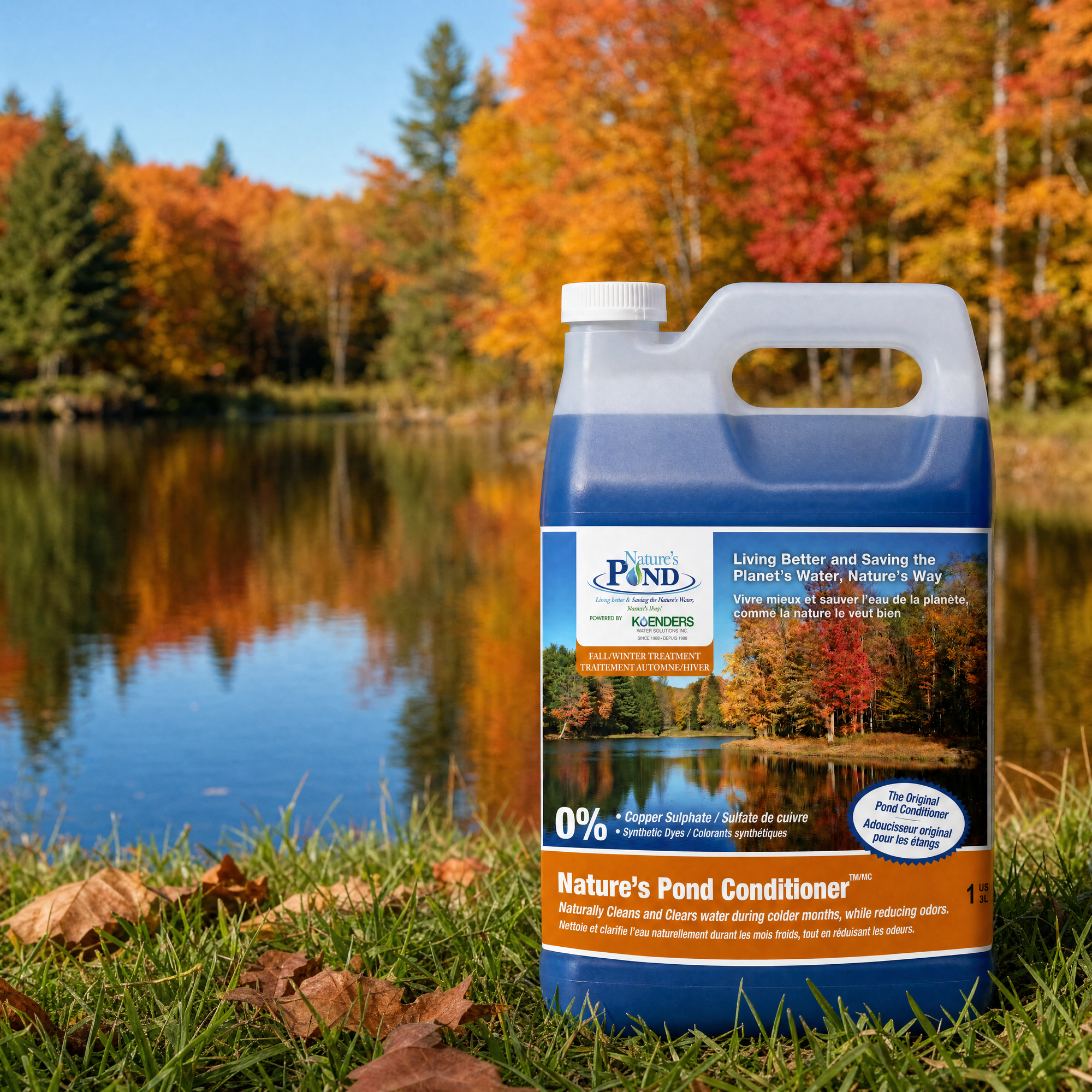
One honest note: not every catalogue carries a separate cold-water product, and you should not assume you need two bottles to do this right. If you are unsure whether a cold-water-rated blend fits your climate, or which conditioner suits your season, ask our pond experts for a free recommendation rather than guessing. You can also browse the current Nature's Pond Conditioner options to see what is available for your pond.
When to start dosing in spring
The temptation every spring is to dose the moment the ice is gone and you can finally get to the water. Hold off if your only product is a warm-water blend. Dosing a warm-water strain into 40F water is mostly wasted product, because the microbes will sit dormant until the water climbs past 50F anyway. Wait for the water to warm through the 50F mark, then apply your startup dose so the bacteria wake up and go straight to work.
If you want to get ahead of early-season muck and the spring green-water flush, that is the case for a cold-water-rated blend applied earlier, while water is still in the 32F to 50F band. Either way, tie your timing to a thermometer reading, not the calendar. A cold spring and a warm spring can be weeks apart on the same date. For the full opening routine, work through our spring pond startup checklist so bacteria dosing lands in the right order alongside aeration and clean-up.
- Measure water temperature a foot or two below the surface, not the air temperature.
- While water is roughly 32F to 50F, a cold-water-rated blend can keep early digestion going.
- Once water passes about 50F, apply your warm-water startup dose to establish the population.
- Continue maintenance dosing through the warm season, easing off as water cools in fall.
Should you double the first dose of the season?
Many programs call for a heavier startup dose to establish the bacterial population, then lighter maintenance doses to keep it going. The logic is sound: after a long winter your pond's native and added microbes have thinned out, and a fuller first dose helps rebuild the workforce quickly before the summer nutrient load hits. But heavier does not mean unlimited. More product is not proportionally better, and there is no benefit to exceeding what the label calls for.
Rather than guess at how much to double, follow the current product label for the exact startup and maintenance rates, and size it to your pond. If you are not sure how to translate acres and depth into a dose, our guide to pond bacteria dosing per acre walks through surface acres versus acre-feet, and our team can size a full-season plan for you on a quick free consultation.
Winter: does bacteria do anything under ice?
Warm-water bacteria do very little under ice. The water is too cold for them, and they stay dormant until spring. Cold-water strains keep some low-level digestion going at freezing temperatures, but you should expect slow progress, not dramatic muck reduction, in the dead of winter. Winter is fundamentally about survival, not clean-up: the priority is keeping enough oxygen in the water and a gas-exchange hole open in the ice so fish make it to spring.
That oxygen job belongs to aeration, not bacteria. A pond sealed under ice with a thick oxygen-hungry muck layer can go anaerobic and cause a winter fish kill, and no amount of bacteria fixes a low-oxygen pond. Our Canadian winter pond aeration guide covers how to hold oxygen and prevent that fish kill through a hard freeze.
Prairie and short-season strategy
Short-season ponds face a real squeeze. Ice cover can last for months, the warm window where warm-water bacteria are fully active is narrow, and the spring and fall shoulders, where cold-water strains earn their keep, are proportionally longer. On the prairies and up north, that changes the plan:
- Treat the spring and fall shoulders as real working windows, not throwaway weeks. A cold-water-rated blend keeps digestion going while warm-water strains are dormant.
- Make the most of the short warm core: dose consistently through summer so the warm-water strains do their heaviest muck and nutrient work while they can.
- Do not dose warm-water bacteria into cold spring melt water. Wait for the 50F mark, or use a cold-water blend early.
- Plan winter around oxygen, not bacteria. Keep aeration running to prevent fish kill under ice.
This is also why aeration and bacteria are a package deal in a short-season climate, not two separate purchases. The narrower your warm window, the more it pays to extend the working season on both ends and keep the pond oxygenated year round. If you are managing a remote or off-grid prairie pond with no power line, our off-grid pond care approach using windmill or solar aeration keeps that oxygen flowing without a hydro bill.
How aeration extends the working window
Temperature sets the pace of bacterial digestion, but oxygen sets the ceiling. The bacteria that digest muck fastest are aerobic: they need dissolved oxygen to convert organics into carbon dioxide and water. Even in the warm core of the season, a low-oxygen pond stalls the very microbes you paid for, and the bottom turns anaerobic and starts producing the rotten-egg smell of hydrogen sulphide instead of clean digestion.
Running bottom-up aeration keeps the sediment interface, where the muck actually is, oxygenated and aerobic. That lets whatever strains are active for the current temperature work at their best, and it keeps the water column mixed so cold and warm layers do not trap oxygen away from the bottom. The result is a longer, more productive working window on both ends of the season. Our guide to why beneficial bacteria needs oxygen explains the aerobic pairing in full, and it is exactly why aeration is the Revive step of the 3-step Pond Care Program.
Temperature decides how fast your bacteria work. Oxygen decides whether they work at all. Get both right and the short-season pond finally catches up.
Frequently asked questions
Related
- Beneficial bacteria and enzymes for ponds How the microbes actually digest muck and waste
- Spring pond startup checklist Open your pond in the right order
- Pond bacteria dosing per acre How much to add by surface acre and acre-foot
- Why beneficial bacteria needs oxygen The aeration pairing that extends your season
- Winter pond aeration in Canada Prevent fish kill through a hard freeze
- Shop Nature's Pond Conditioner Beneficial bacteria and enzyme blends
FAQ